

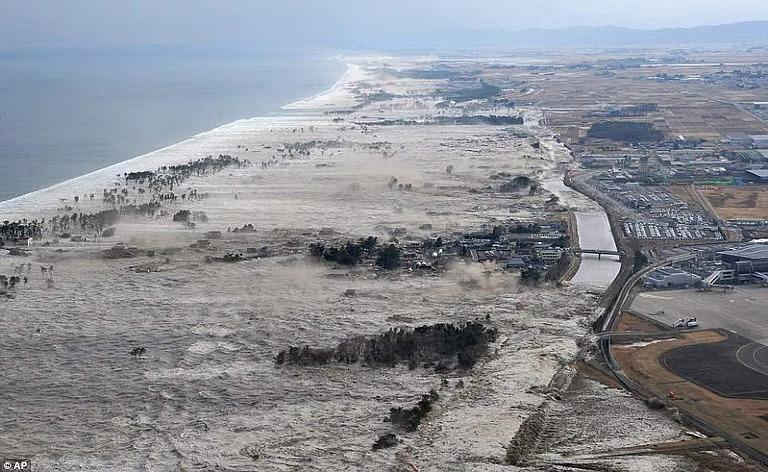
Powerful 7.2 Earthquake Off Northern Japan Triggers Tsunami Alert: Coastal Regions Evacuated, Authorities on High Alert
Japan was shaken late Monday night after a powerful undersea earthquake struck off its northern coastline, triggering immediate tsunami alerts and forcing thousands of coastal residents to flee to higher ground. The quake — initially recorded at magnitude 7.2 and later revised by additional monitoring agencies to 7.5–7.6 — hit just before midnight, rattling buildings, disrupting transport, and reviving painful memories of Japan’s past seismic tragedies.
⚡ The Quake: Epicentre, Intensity & Regions Affected
According to the Japan Meteorological Agency (JMA), the earthquake’s epicentre was located off the coast of Aomori Prefecture, northeast Japan, at a depth of approximately 50–60 km under the seabed.
Strong shaking was felt across:
Aomori
Hokkaido
Iwate
Miyagi
Parts of northern Honshu
Residents reported violent jolts lasting several seconds, strong enough to knock items off shelves and cause temporary power outages in some localities.
🌊 Immediate Tsunami Alert: The Race to Higher Ground
Minutes after the quake, the JMA issued a tsunami warning, predicting waves up to 3 metres (10 feet) along some northern coastal regions.
Authorities activated loudspeakers, emergency sirens, and public broadcast systems urging people to:
Leave homes immediately
Move to higher ground
Stay away from beaches and river mouths
Avoid returning until official clearance
Observed Tsunami Waves
Though initial predictions suggested large waves, actual tsunami surges were milder:
40–70 cm recorded at several ports in Iwate and Hokkaido
Minor coastal flooding in some low-lying fishing towns
No widespread inundation reported so far
Despite the lesser impact, officials warn that aftershocks could still trigger more significant waves.
🚑 Injuries & Damage Reported So Far
Early counts indicate 23–33 people injured across northern prefectures. Most injuries were caused by:
Falling furniture
Debris from ceilings
Panicked rushing during evacuation
Damage assessment is ongoing, but so far:
No major structural collapses have been reported
Railway lines suspended operations as tracks are inspected
Airports in northern Japan temporarily halted flights
Power cuts affected several thousand households
Emergency services remain on standby for possible aftershocks.
🛑 Transport Disruptions: Trains, Flights, Highways Closed
Japan’s famously efficient transport network was immediately impacted:
Shinkansen (bullet trains) were halted
Several flight departures from Sapporo, Aomori and Misawa were suspended
Coastal highways were closed due to tsunami risk
Ferry services paused across northern Japan
Transport operators are conducting safety inspections before restoring normalcy.
🏢 Government & Emergency Response: Full Activation
Prime Minister’s office activated the national Crisis Management Center in Tokyo within minutes of the quake. Key actions taken:
Deployment of Self-Defense Forces (SDF) for coastal support
Evacuation assistance in Aomori, Iwate and Hokkaido
Tsunami monitoring deployed along the entire Pacific coast
Nuclear power plants placed under emergency inspection protocols
Japan confirmed that no abnormalities were detected at nuclear facilities, including the Misawa and Onagawa regions — a major concern given Japan’s 2011 Fukushima disaster.
🌏 Global Concern: Why the World Watches Japan Quakes Closely
Japan lies at the intersection of four major tectonic plates, making it one of the most seismically active nations on Earth. The region affected today is near the same zone that triggered:
The 2011 9.0 Tohoku earthquake and tsunami — one of the worst natural disasters in modern history
Multiple destructive quakes in the last 40 years
This is why even a 7-magnitude quake raises global alert levels.
🔍 Experts Speak: Why This Quake Triggered Immediate Concern
Seismologists note several alarming points:
1. Offshore epicentre → Higher tsunami risk
Quakes under the ocean displace water, making tsunami formation easier.
2. Shallow depth = More violent shaking
Shallow quakes transfer more energy to the surface.
3. Strong aftershocks expected
Magnitude 6+ aftershocks may follow in coming days.
4. Winter weather complicates evacuation
Northern Japan is experiencing sub-zero temperatures, making nighttime evacuation difficult.
📢 Public Advisory: What Authorities Are Urging Right Now
Residents in affected regions are advised to:
Avoid coastlines until all-clear is issued
Stay in elevated shelters
Prepare for aftershocks
Keep emergency kits ready
Follow only official information from JMA & govt portals
Authorities have not yet lifted all warnings — the situation remains dynamic.
💬 Voices From the Ground: “We Ran Without Shoes”
Local residents described scenes of panic:
“The shaking was so strong, we just grabbed our children and ran.”
— Resident, Aomori
“Siren started blasting. We left immediately and drove uphill.”
— Fisherman, Iwate
“This felt stronger than usual. Everyone is scared of a repeat of 2011.”
— Shopkeeper, Hokkaido
🧭 What Happens Next?
Over the next 24 hours, authorities will:
Monitor for aftershocks
Inspect coastal damage
Restore transport services
Continue evacuations where needed
The full impact will be clearer by the time daylight assessments are completed.
Leave a comment
Your email address will not be published. Required fields are marked *